


practical info
Collective Places
visual material




general aspects
With the aim of revitalizing the public life of Jalpa de Méndez, Tabasco, an urban master plan was designed for SEDATU, which renovated the city's most representative public spaces.
The Community Development Center (CDC) is a cultural and educational space that offers more inclusive development opportunities for the local community.
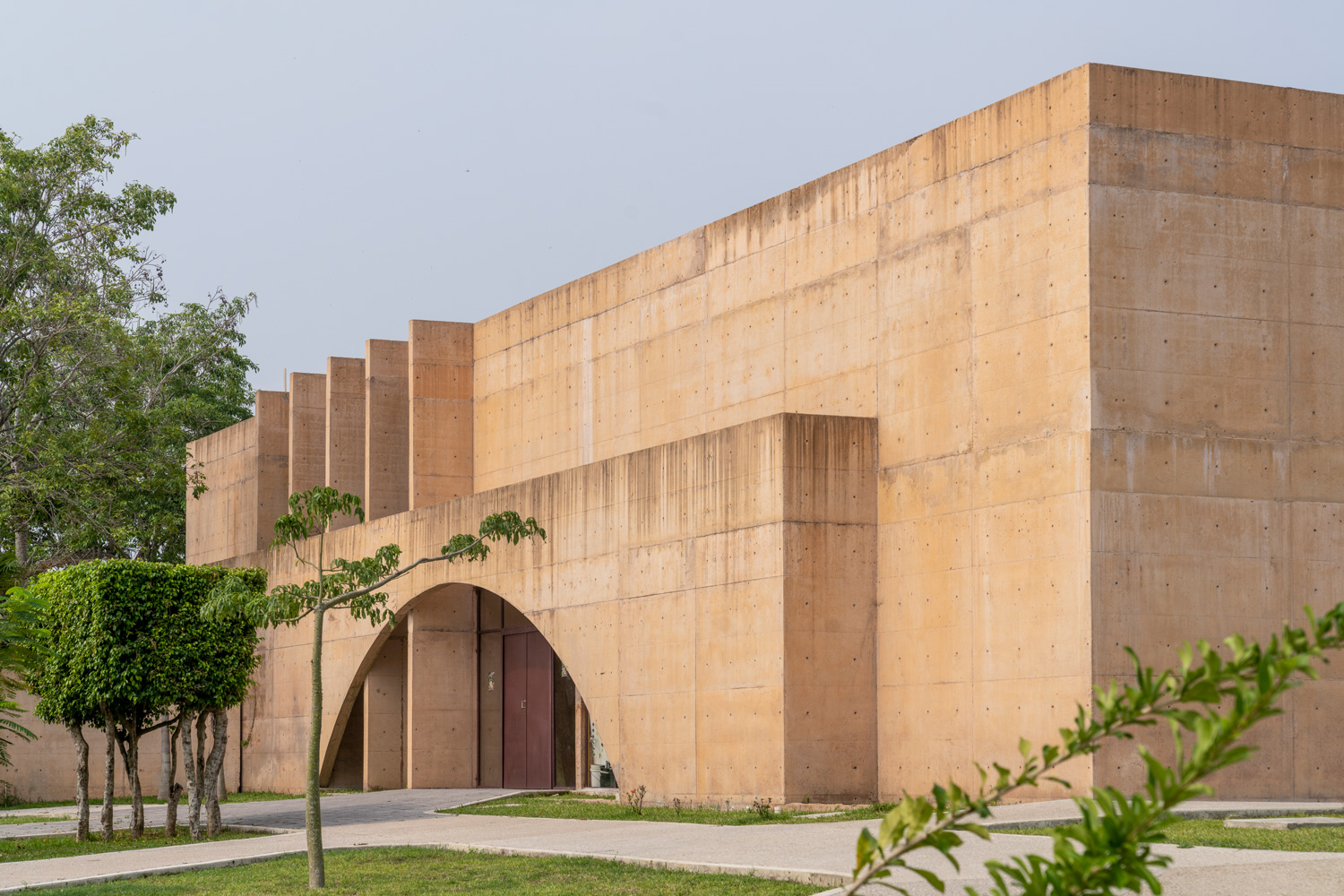
The project was conceived as a habitable sculptural piece, with an architectural program composed of workshops, multi-purpose rooms, a library, an auditorium, and an administrative area. These are developed through a simple structure, composed of eight monumental concrete panels perforated with semicircular arches.
The perforations in the concrete panels create the necessary void for an interior garden, providing an urban oasis with a pleasant microclimate. The central garden concentrates the core of the work, a vibrant space that allows for interesting views from inside the building.
As a local identity mark, orange-toned concrete was used, evoking the color of the regional quarry present in the balustrade of the main arcade of the historic center of Jalpa de Méndez. This choice also responds to the region's climate, reflecting the warmth and avoiding the accumulation of humidity.
The design offers a modern reinterpretation of the ancient conventual structures that characterize Mexican architectural history. The semicircular arches present in the structure represent a contemporary update that not only contributes to the architectural design but also favors air circulation and the entry of natural light into the interior of the building.
about the category
We chose this category because the project, aimed at revitalizing public life in Jalpa de Méndez, Tabasco, fosters social and cultural development by providing an inclusive space for education, culture, and community engagement.
The construction represents a unique fusion of modern design with traditional artisanal techniques, fostering a profound exchange of knowledge with the local community.
The participatory process, involving local workers, strengthened the connection between the architecture and the community, instilling a sense of achievement, pride, and belonging. By reinterpreting traditional convent structures, the design offers a contemporary take on Mexican architectural history, ensuring the project is both innovative and contextually relevant.
This alignment with the region's cultural and environmental context underscores the project's role in promoting long-term social and cultural development in Jalpa de Méndez.