


practical info
Collective Places
visual material


general aspects
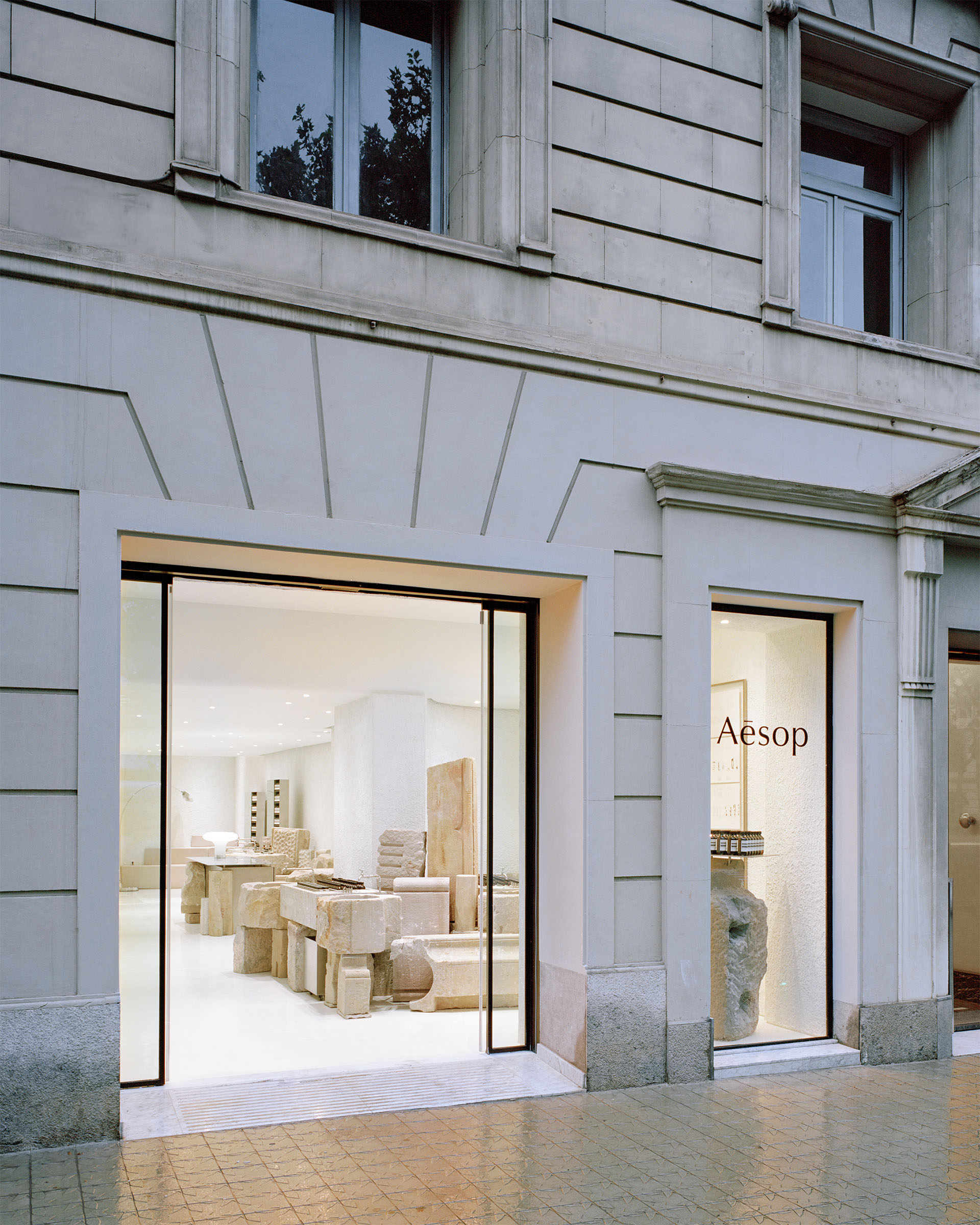
Aesop Diagonal's design is rooted in identity and sustainability.
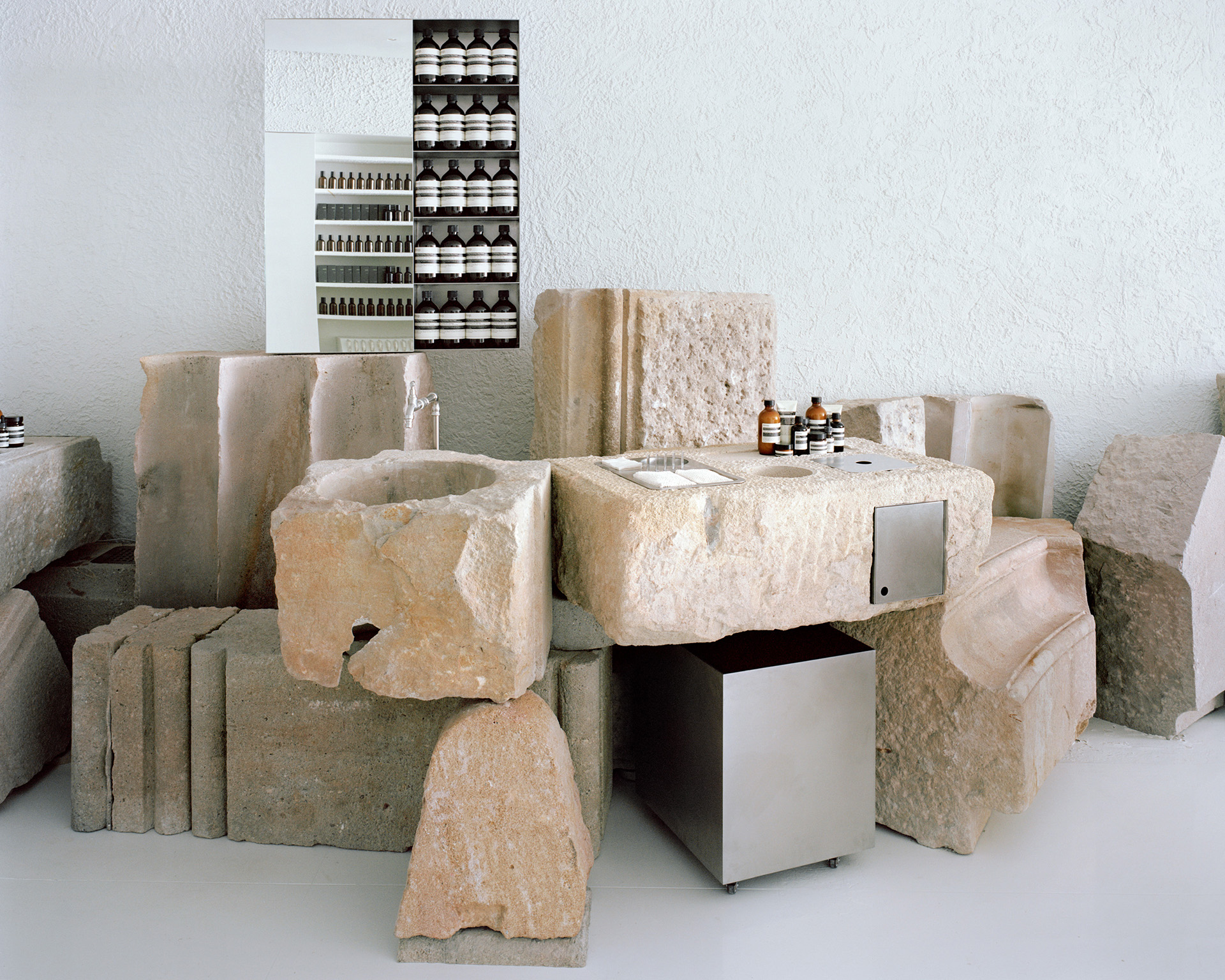
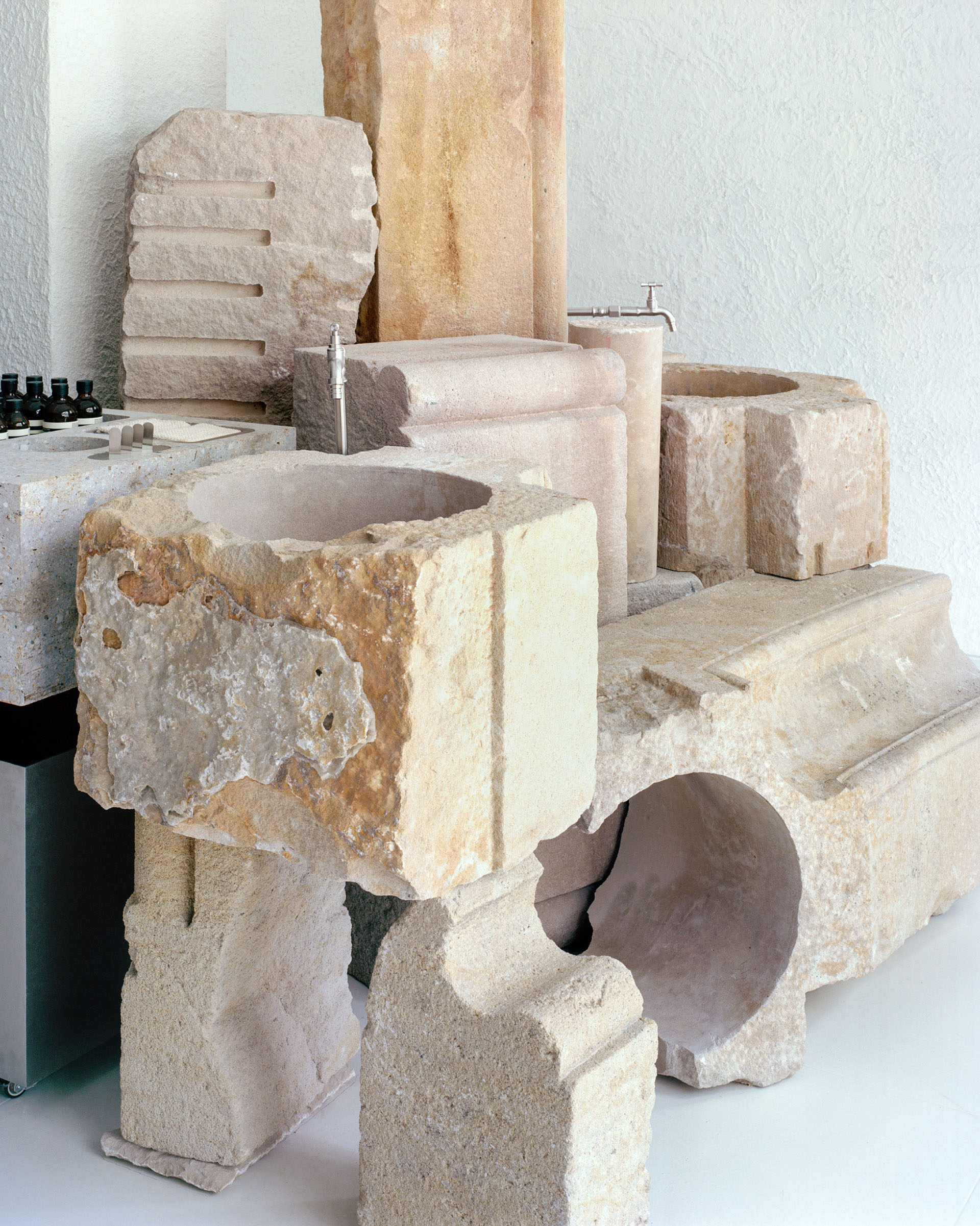
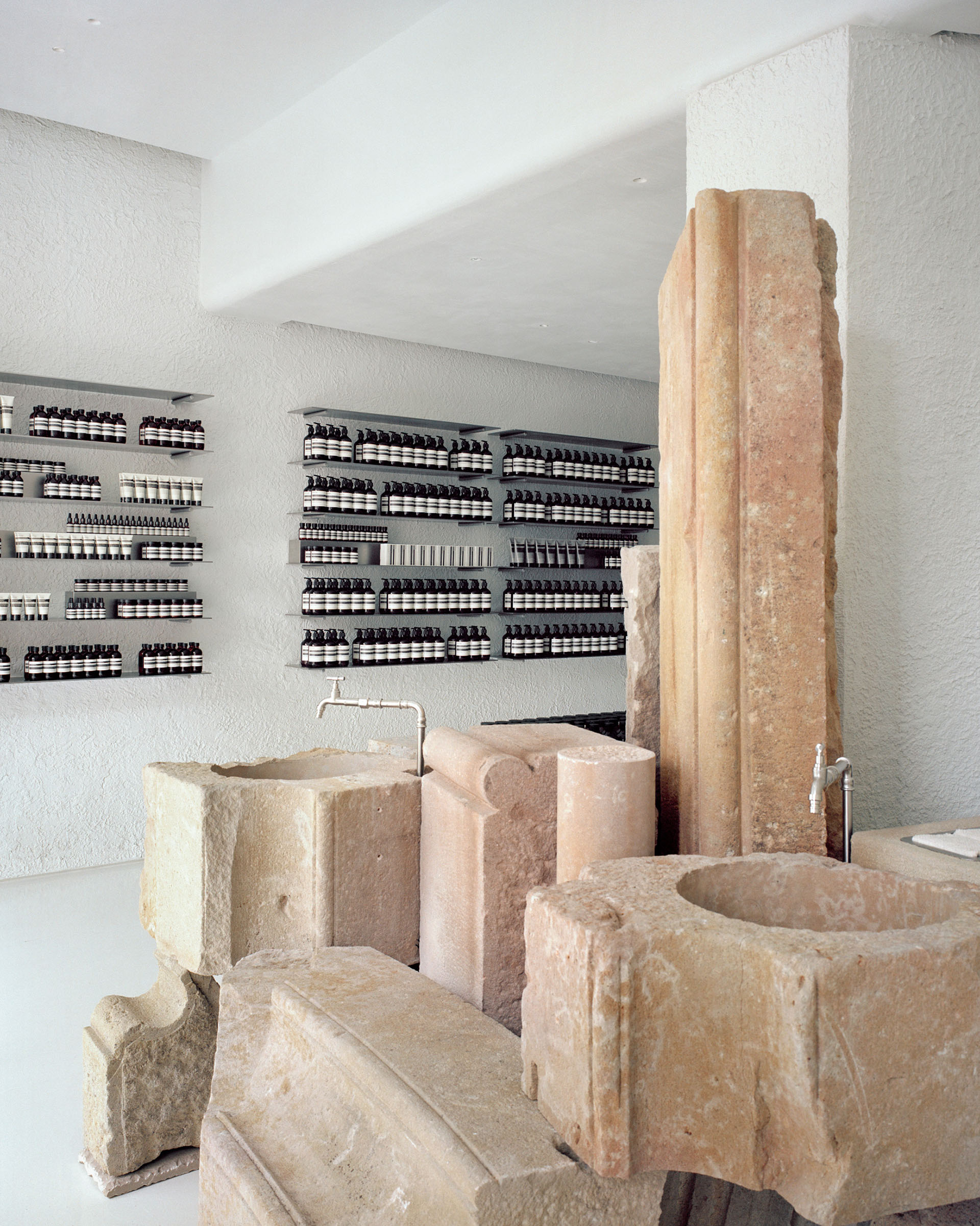
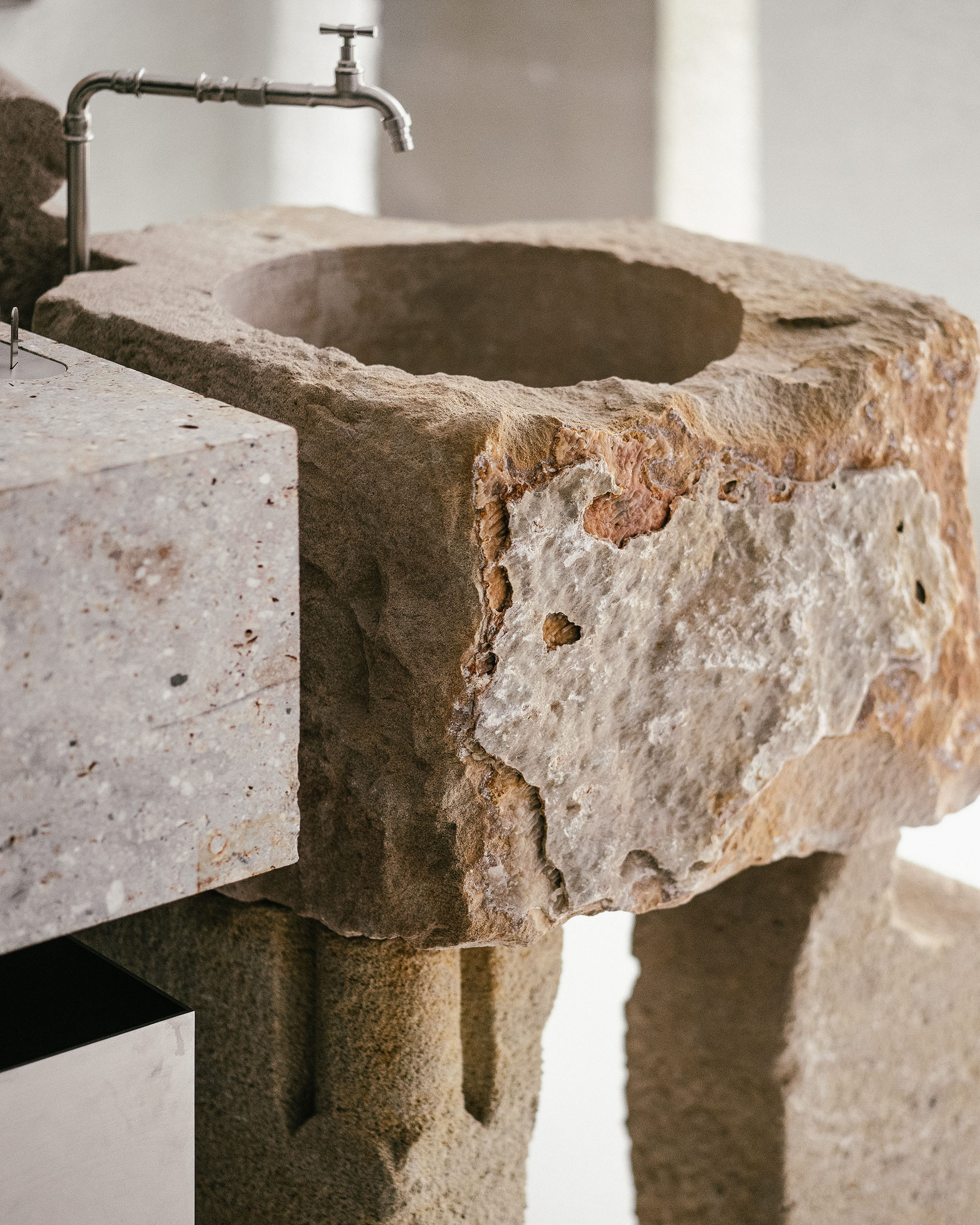
Social, local, and timeless. These are the three values that we were required to apply. But we decided to add a fourth: sustainable. Regarding the social aspect, we studied Barcelona's fountains over the years to understand their social impact. Regarding the timeless aspect, we revisited the material research conducted at the beginning of the project when the client had a different location in mind. After considering the new location, we eliminated glass and raised questions about ceramics. Ultimately, stone emerged as the clear winner, thanks to its unmatched resistance and durability. With a radical view, we vouched to reuse local stones, which make the project sustainable and endowed with a durable purpose.
The client emphasized that the store should prioritize meaningful connections with people and a compelling narrative rather than solely focusing on creating a visually stunning space.
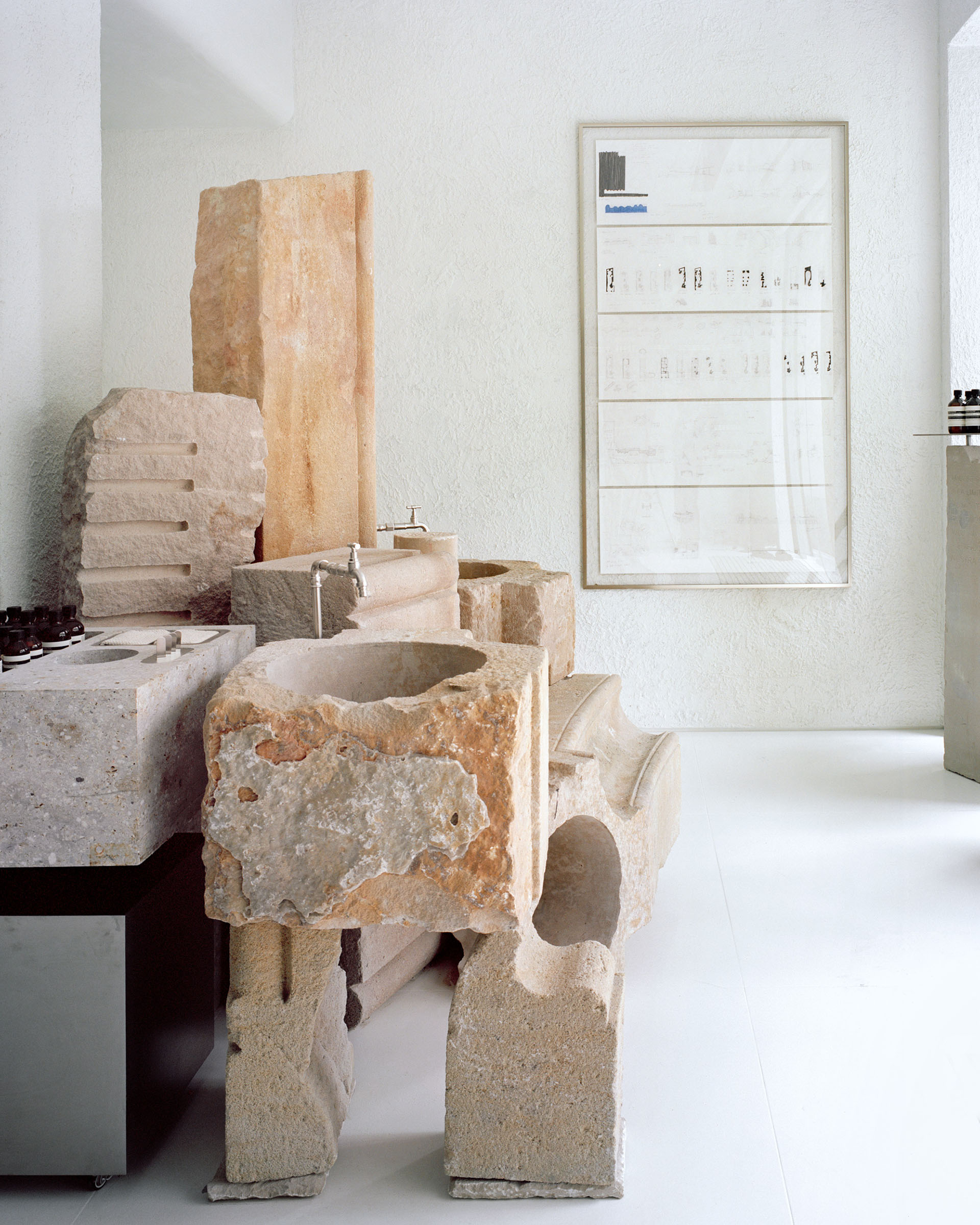
After considering all these factors, it was clear that our design had to push the idea of local and sustainability to the limit. We radically looked for reusable materials. In our search to connect the dots between local and sustainable, we found a figure that perfectly resolved this dichotomy: the anonymous artisans and unknown artists who preserve tradition and technique throughout generations.
The project showcases innovation through the process we underwent, which was completely different from what we are used to. We named it 'Creative Anastylosis'. Anastylosis is a term that describes the architectural conservation of ancient monuments by reassembling their original pieces as precisely as possible; it is "creative" because the purpose, in this case, was not to reconstruct but to craft a new structure from discarded stone. In this way, the conventional design process was reversed—instead of starting with an imagined form and materialising it, we started with materials and reimagined what they could become.
about the category
We have decided to present the project to this category because it's a space that aims to share a story with the public. The project preserves pieces from old buildings in Barcelona that were once forgotten and wants the people (especially locals) to feel connected to the store and the stone's memories when visiting it.
The project has been possible due to the collective effort of all the parties: Aesop, ourselves, and, on top of everything, the stonemasons, Barbany, who had been saving all these pieces out of sheer dedication and their love for the now-closed Montjuic quarry and generously shared them with Aesop for their use. The project's core concepts revolve around the idea that if the store ever closes, the stones will be returned to them.